Crypto Ledger Private Keys: Complete Isolation Guide
How secure element technology keeps your keys isolated and safe from all attacks.
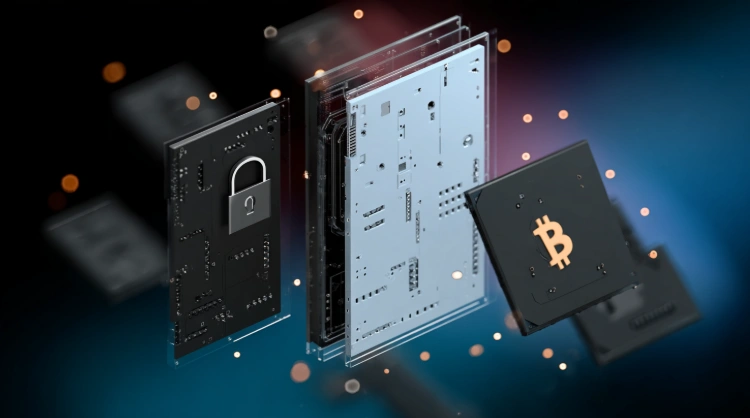
Crypto Ledger Private Keys receive protection through complete hardware isolation, ensuring they never exist on internet-connected devices where attackers could potentially access them. The private key management approach fundamentally differs from software wallets by generating, storing, and using keys exclusively inside a certified secure element chip. This architecture eliminates the primary attack vector exploited in cryptocurrency theft.
Crypto Ledger key protection extends throughout the entire key lifecycle from initial generation through every signing operation. The secure element performs all cryptographic operations internally, outputting only mathematical signatures that cannot be used to derive the underlying private keys. Understanding this isolation model explains why hardware wallets provide superior security compared to software alternatives.
How Crypto Ledger Isolates Private Keys
Crypto Ledger private keys exist only inside the secure element chip and never leave this protected environment under any circumstances. The isolation architecture prevents extraction through software attacks, network interception, or physical probing. Even with complete control over the host computer and Crypto Ledger application, attackers cannot access the keys stored inside the hardware wallet.
The isolation extends to all operations involving private keys:
- Key generation occurs entirely within the secure element using certified random number generation
- Key storage uses protected memory regions that cannot be read by external processes
- Key usage for transaction signing happens inside the secure element with only signatures output
- Key backup through recovery phrase display occurs only on the hardware wallet screen, never on connected devices
Why Keys Never Leave the Device
Crypto Ledger key isolation is enforced by hardware design, not software policy. The secure element physically cannot transmit private keys through its communication interface. The chip is designed and manufactured specifically to prevent key extraction, with multiple protective mechanisms:
- No API exists to request private keys from the secure element
- Communication protocols transmit only unsigned transactions inbound and signatures outbound
- Protected memory regions cannot be addressed or accessed by external commands
- Tamper detection mechanisms trigger key destruction if physical intrusion is detected
This hardware-enforced isolation means that even compromised firmware cannot export private keys. The secure element verifies firmware signatures before execution and rejects unauthorized code.
Secure Element Key Generation Process
Crypto Ledger private keys originate from a cryptographically secure random number generated inside the secure element during initial wallet setup. The generation process follows these steps:
- User initiates new wallet creation on the hardware device
- The secure element activates its certified true random number generator
- Hardware-based entropy sources (thermal noise, electronic fluctuations) produce random data
- The random data seeds the key derivation algorithm according to BIP-39 specification
- Master seed generates inside the secure element protected memory
- The 24-word recovery phrase displays on the hardware wallet screen for user backup
- User confirms phrase recording by verifying selected words
- Master seed remains permanently in secure element; phrase display never repeats
The entire process occurs on the hardware device. The Crypto Ledger application displays instructions but has no access to the random number, seed, or recovery phrase.
True Random Number Generation
Crypto Ledger key protection depends on high-quality randomness for key generation. The secure element contains a certified true random number generator (TRNG) that produces unpredictable output using physical phenomena:
| Entropy Source | Description | Contribution |
|---|---|---|
| Thermal noise | Random electron movement in resistors | Primary entropy |
| Shot noise | Discrete electron flow variations | Secondary entropy |
| Oscillator jitter | Timing variations in clock circuits | Additional entropy |
| Environmental factors | Temperature and voltage fluctuations | Supplementary entropy |
The TRNG undergoes continuous health monitoring with automatic shutdown if output quality degrades. Certification testing verifies randomness quality meets cryptographic standards. Poor randomness would create predictable keys vulnerable to brute-force attacks, making TRNG quality critical to overall security.
Transaction Signing Without Key Exposure

Crypto Ledger private keys perform signing operations inside the secure element without ever being exposed. The transaction signing flow maintains key isolation throughout:
- User initiates transaction in the Crypto Ledger application (recipient, amount, fee)
- The application constructs an unsigned transaction according to blockchain protocol
- Unsigned transaction data transmits to the hardware wallet via USB or Bluetooth
- The secure element parses the transaction and displays details on the hardware screen
- User verifies recipient address, amount, and fee match intended transaction
- User confirms by pressing buttons or using touchscreen on the hardware wallet
- The secure element retrieves the appropriate private key from protected memory
- Signing algorithm executes entirely inside the secure element
- Only the cryptographic signature outputs through the communication interface
- The Crypto Ledger application receives the signature and broadcasts the complete transaction
The private key never leaves the secure element during this process. The signature proves key possession without revealing the key itself, following standard public key cryptography principles.
Recovery Phrase and Key Derivation
Crypto Ledger key protection includes backup through the 24-word recovery phrase, which can regenerate all private keys if the hardware wallet is lost or damaged. The relationship between recovery phrase and keys follows the BIP-39 and BIP-32 standards:
- The recovery phrase encodes the master seed in human-readable format
- The master seed deterministically derives all account private keys
- Each blockchain and account uses a specific derivation path from the master seed
- Any device with the recovery phrase can regenerate identical keys
Security considerations for recovery phrase storage:
- Write the phrase on provided recovery sheets using permanent ink
- Store in fireproof and waterproof locations separate from the hardware wallet
- Consider metal backup solutions (Cryptosteel, Billfodl) for durability
- Never store digitally in files, photos, cloud storage, or password managers
- Never enter the phrase on any computer, phone, or website
- The phrase is only entered on a hardware wallet during device restoration
For phishing protection information, see our Crypto Ledger Phishing Protection guide. For overall safety assessment, visit Is Crypto Ledger Safe.
Frequently Asked Questions
-
The secure element is designed specifically to prevent key extraction. Certified evaluations have not identified practical attacks capable of extracting keys from genuine Ledger hardware.
-
Private keys exist only on the hardware wallet, not on Ledger servers. Users retain full control through their recovery phrase, which works with any BIP-39 compatible wallet.
-
No. The secure element cannot transmit private keys through any interface. Only unsigned transactions enter and signatures exit. Keys remain permanently isolated inside the chip.
-
The application cannot access private keys. The keys exist only inside the hardware wallet secure element. This is a security feature, not a limitation.
-
BIP-32 hierarchical deterministic derivation creates unique keys for each blockchain and account using different derivation paths from the single master seed encoded by the recovery phrase.
-
Three incorrect PIN attempts wipe the device keys. However, you can restore the keys on a new or reset device using your 24-word recovery phrase. The phrase is the ultimate backup.
-
Ledger cryptographically signs all firmware. The secure element verifies signatures before accepting updates. Unsigned or modified firmware is rejected, preventing malicious code execution.